
Wet Room vs Walk-in Shower
The honest comparison from a West Midlands bathroom installer — costs, waterproofing, accessibility and what we usually recommend (spoiler: most of the time, it's a walk-in shower tray).
Short answer
For most UK homes, a walk-in shower beats a wet room
We install both, every week. The reason we usually recommend a walk-in shower with a low-profile tray comes down to one thing — containment.
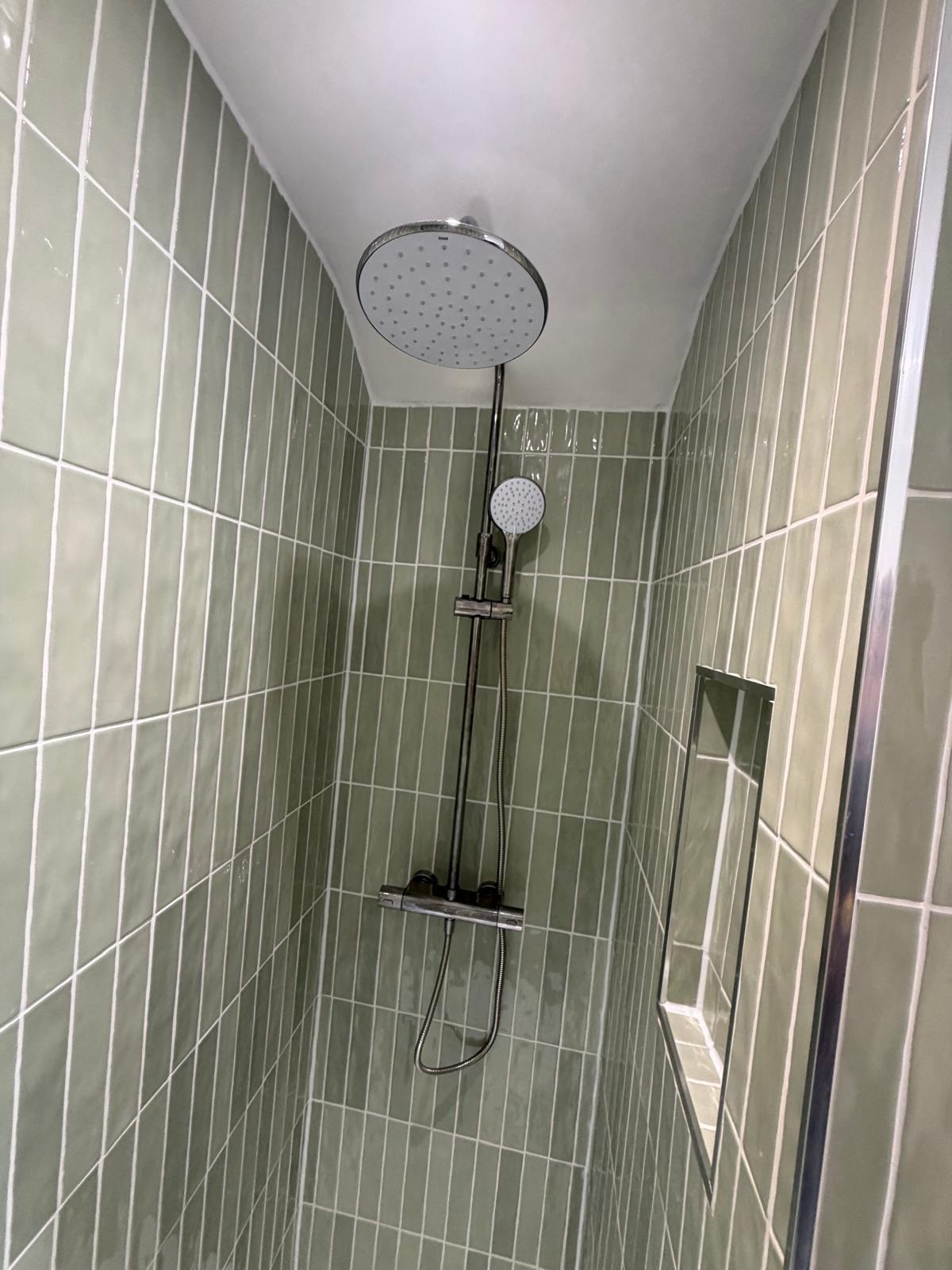
A walk-in shower has a low-profile tray and a glass screen, so 100% of the water stays in the shower zone. The rest of the bathroom floor stays bone dry — no soggy bath mats, no water creeping under the vanity, no maintenance on huge expanses of grout.
A wet room has no tray and no screen. The whole floor is tanked and falls toward a linear drain. Done properly, it looks stunning. Done poorly, you end up with water in the ceiling below and a very expensive repair. Even when done properly, the open layout means splash inevitably reaches other parts of the room.
Our default recommendation: a frameless walk-in shower with a 15–25mm low-profile tray. You get the same hotel-quality feel, lower cost, faster install, less ongoing maintenance, and water exactly where it should be.
When we do recommend a wet room: full wheelchair-accessible bathrooms, very small ensuites where every cm matters, or specific design briefs where the open look is the whole point.
Side by side
Wet room vs walk-in shower — full comparison
Real numbers and honest trade-offs based on bathrooms we install every week across the West Midlands.
Costs are typical M3 Trades installed prices in the West Midlands, including supply & fit, in 2026.
Walk-in shower
When to choose a walk-in shower
- You want luxury without doubling the budget
- You'd rather not deal with daily splash on the rest of the floor
- Upstairs bathroom on a timber sub-floor (simpler install)
- Property may sell within 5–10 years (broader buyer appeal)
- You still want the bath alongside the shower
Wet room
When to choose a wet room
- Full wheelchair accessibility is needed
- Very small ensuite where every centimetre matters
- You specifically want the open, hotel-style look
- Concrete floor (easier sub-floor build-up)
- You're happy with extra waterproofing prep and cost
FAQs
Wet room vs walk-in shower — frequently asked questions
The questions homeowners actually ask before deciding.
Which is cheaper — a wet room or a walk-in shower?
A walk-in shower is almost always cheaper. A wet room needs full floor and wall tanking, a properly formed sub-floor with the correct falls, and linear drainage — typically £1,500–£3,000 more than the equivalent walk-in shower in the same space.
Does a wet room add more value to a UK home?
Not necessarily. UK buyers often prefer a bathroom that has both a bath and a contained shower. If you're removing the only bath in the house, a wet room can actually reduce sale appeal. A walk-in shower with a low-profile tray tends to be the safer choice for resale.
Are wet rooms safe upstairs?
Yes, if the floor is built up correctly, falls are formed properly and tanking is applied to manufacturer spec. Skip any of that and you'll end up with water in the ceiling below — which is why we don't cut corners on wet-room waterproofing.
Why does M3 Trades prefer walk-in showers?
They're more contained. A low-profile tray plus a glass screen keeps water in the shower zone, the rest of the floor stays dry, towels and bath mats don't get soaked, and there's far less ongoing maintenance. We still install proper wet rooms for accessibility or specific design briefs — but for most homeowners, a walk-in shower delivers the same hotel-quality feel with fewer downsides.
Which is better for accessibility?
A level-access wet room with a linear drain is unbeatable for wheelchair users and anyone who can't step over a tray edge. For most other situations — including elderly homeowners — a low-profile (15–25mm) shower tray with a slim glass screen gives 90% of the benefit with none of the downsides.
Free quote
Not sure which is right for your bathroom? Get a free site visit.
Tell us about your bathroom project and we’ll get back to you to arrange the next step.